
A part of you still believes alcohol is what makes life softer and more bearable. It marks the end of the day. It turns “just dinner” into “a proper evening.” It smooths out the edges of your thoughts long enough for you to exhale.
When you imagine life alcohol free, it’s easy to picture yourself as the boring one at the table, the awkward one at parties, the tense one on vacation. You see everyone else relaxing with a drink and feel like you’d be the only one standing there with empty hands.
And yet, there’s another part of you that’s tired. Tired of planning evenings around whether you’ll drink or not. Tired of waking at 3 a.m. with a racing heart and a dry mouth. Tired of wondering if this really is “normal” or if alcohol has quietly taken up more space in your life than you ever intended.
This is for that part. The part that secretly hopes it’s possible to be happier sober. The part that wonders what life might feel like if alcohol weren’t in charge. The part that knows you are capable of more than just getting through the day.
You don’t have to agree with every word that follows. Just notice what makes something inside you relax a little and think, “Oh… that would be nice.”
Mornings Start To Feel Like A Real Fresh Start
When alcohol is in the picture, mornings often feel like payback. You wake with a heavy head and a sour taste in your mouth. There are gaps in your memory, so you reach for your phone to check messages and social media, scanning for anything you might have said or done that needs repairing. As you’re getting ready, the familiar thought drops in: “I said I wasn’t going to drink that much last night. Why do I keep doing this?”
It’s hard to feel excited about your day when it starts with shame, exhaustion, and another promise to “be better tonight” that you’re not sure you’ll keep.
Alcohol free mornings feel completely different, even before anything else in your life changes. You open your eyes and remember what happened the night before. Your body might still be tired from work, parenting, or stress, but it isn’t dragging around the extra weight of a hangover. Coffee becomes a simple pleasure instead of a rescue mission. Getting out of bed is still a choice, but it’s not a battle between nausea, dizziness, and guilt.
Instead of asking, “How bad is this going to feel today?” you begin to ask, “What do I want from today?” You’re not starting from a hole you have to dig out of. You’re starting at level ground, with enough clarity and energy to move in the direction you actually care about.
Anxiety Finally Starts To Turn Down Its Own Volume
Many people drink because they feel anxious. Wine takes the edge off after work, helps you get through social events, quiets your thoughts enough that you can stop replaying the day. At seven in the evening, alcohol feels like a friend to your anxiety. At three in the morning, it turns into a megaphone.
Your heart races. Your thoughts spin. You lie awake replaying conversations, mistakes, and worst‑case scenarios. You promise yourself you’ll drink less tomorrow, even as you feel the familiar dread that you might not. The very thing that calms you for a short window actually cranks your internal alarm system up even higher later.
When you remove alcohol, your nervous system finally has a chance to stabilize between days instead of being yanked up and down by a chemical roller coaster. Stress doesn’t disappear. Life is still life. But you’re no longer adding an extra layer of physiological anxiety on top of what you’re already carrying.
Sleep gradually becomes deeper and less fragmented. Those middle‑of‑the‑night wakeups become less frequent and, when they happen, less dramatic. You stop needing to scan your life each morning for disasters you might have created while you were drinking.
You might still use therapy, coaching, or tools for anxiety. The difference is that you’re working with your real brain, not one that’s constantly recovering from last night. That makes calm, steadiness, and genuine contentment much more accessible.
You Stop Waking Up Already Angry At Yourself
One of the worst parts of drinking isn’t the physical hangover. It’s the mental one.
You come to in the morning and immediately review last night, looking for evidence that you failed yourself again. You count your drinks and compare them to whatever rule you’d set: just two, only on weekends, never on weeknights. If you broke the rule, the inner commentary begins: “I should have more self‑control. This is ridiculous. What is wrong with me?”
It’s exhausting to start every day in an argument with yourself.
When you remove alcohol, you give yourself a chance to wake up on your own side. You don’t have to be perfect. You don’t have to become a different person overnight. Simply having more nights where what you did matches what you intended starts to rebuild trust.
You step out of bed feeling neutral instead of guilty. Your shower is no longer a conference room where you renegotiate rules for the next round of drinking. Over time, the way you talk to yourself changes. You notice thoughts like, “I handled that well,” or “I’m proud I stuck with my plan.”
That tone shift might be quiet, but it’s the foundation of a much happier inner life. You become more of an ally to yourself instead of your own harshest critic.
Evenings Become Something You Design, Not Just Survive
For a long time, evenings may have felt like a tunnel you had to crawl through. You come home depleted, with your brain already listing reasons you “deserve” a drink. Work, family needs, house tasks, notifications — it all becomes one big blur. Alcohol is the switch that tells your mind and body the day is over and you are allowed to relax.
The first drink brings a rush of relief, but it never quite lasts. You chase that feeling with another glass, and another, until the evening dissolves. You’re left with snatches of conversation, a vague sense of having checked out, and the promise that tomorrow night will be different.
When you take alcohol out of the equation, evenings can feel strange at first. There’s a gap where the automatic habit used to be. But that gap is also usable space.
You can build new transition rituals that work with your life instead of against it: a short walk alone before you go back into the house, ten minutes in your car after work with music and deep breaths instead of emails, a hot shower and comfortable clothes the moment you get home, a favorite alcohol free drink in a real glass that still signals “my workday is done” without undoing your progress.
Not every evening will be magical. There will still be dishes, emails, homework, and logistics. But you will actually be present for all of it, and that presence brings a grounded kind of satisfaction that “numb and fuzzy” never really delivered.
Your Closest Relationships Start To Feel Safer And Closer
Even without a dramatic “rock bottom,” alcohol changes how you show up with the people you love.
You may find yourself half listening, nodding along while your mind is elsewhere. You might rush through bedtime because you want to get back to your glass. You may notice that you’re more irritable, checked out, or inconsistent by the end of the night than you want to be.
Alcohol free, you start to notice all the small moments you were missing. You remember the details of conversations. You catch the way someone’s face lights up when you really hear them. You have more emotional bandwidth to say yes to the small things: a game, an extra chapter, a proper conversation, a real hug.
You aren’t suddenly a perfect partner, parent, or friend. No one is. But you are reliably there. Your reactions are more predictable. The people around you don’t have to guess which version of you they’re going to get at nine o’clock at night.
That dependability builds trust. Over time, trust feels like ease, affection, inside jokes, and shared memories you actually remember. It’s another form of happiness — deeper and steadier than anything that ever came from a bottle.

Work And Ambition Start Working For You Again
You care about your work and your responsibilities. It’s easy to believe alcohol is helping you cope with the demands: the deadlines, the pressure, the emails, the unseen load you’re carrying. A glass at the end of the day feels like the only way to come down.
The problem is that the coping mechanism quietly undermines the very areas you’re trying to protect. Mornings start slower. Your brain feels foggier. It’s harder to focus deeply or think creatively. Small mistakes slip in. Tasks pile up. You end up working harder just to keep up with the standard you’ve set for yourself.
When you remove alcohol, you gradually get back your ability to think clearly and consistently. You show up to your desk feeling rested more often. You remember what you agreed to in meetings. You can tolerate stress without immediately needing to numb it.
You might notice that tasks you’d been avoiding suddenly feel more manageable, simply because your brain isn’t pulling all its energy toward recovery. As your focus and energy stabilize, your sense of competence returns. You realize you weren’t “failing” at work; you were trying to perform at a high level while asking your brain and body to recover from a nightly hit.
Taking alcohol out of the mix is like taking ankle weights off halfway through a race. You’re the same person, with the same experience and skills, but everything feels a little less impossible.
Your Body Quietly Starts Saying Thank You
You may not be chasing a perfect wellness routine. More than anything, you’d like to feel comfortable in your own skin again.
Alcohol affects sleep, hormones, digestion, skin, weight, and energy. Often the impact is so gradual that it’s easy to blame everything on age, stress, or “just how life is now.”
When you stop drinking, your body doesn’t change overnight. But it does exhale. Sleep becomes deeper and more restorative. Your face looks a bit less puffy in the morning. You might notice fewer tension headaches or random aches. Your energy evens out so you’re not crashing as hard in the afternoon.
You may find yourself moving more, not from punishment, but because movement actually feels better. Clothes fit more comfortably, even if the scale never becomes your favorite thing. You feel sturdier, more grounded, more like you live in your body instead of fighting with it.
This isn’t about perfection or chasing a certain number. It’s about the relief of not constantly working against your own physiology. That physical ease supports emotional and mental ease too, and together they create a version of happiness that doesn’t depend on a drink.
You Get Back Time, Energy, And Attention You Didn’t Know You’d Lost
Alcohol takes time in obvious ways: the hours you spend drinking, the mornings you lose to hangovers, the evenings that dissolve into a blur.
It also steals time in quieter, more insidious ways. The mental hours spent deciding whether tonight is a “drinking night.” The energy burned negotiating rules, making exceptions, and then renegotiating after you break them. The time spent replaying last night and trying to remember what you said. The projects, hobbies, and connections that never quite get your full attention because your mind is already half‑way to the first pour.
When you stop drinking, you don’t suddenly gain six extra hours in a day, but the hours you do have become clearer and more available. You can read more than a page or two of a book before you fall asleep. You start and finish small projects that have lived on a mental list for months. You have enough bandwidth to sign up for a class, try a hobby, reach out to a friend, or sit with your own thoughts without constantly reaching for your phone or your glass.
Simple pleasures start to make sense again: a walk, a good meal, a conversation you remember from start to finish. Happiness often shows up as the quiet satisfaction at the end of the day when you realize you actually used your time in a way that matches what matters to you.
You Learn To Like Your Own Company
One of the biggest reasons alcohol feels essential is that it keeps you from having to fully sit with yourself. Wine smooths over loneliness, restlessness, boredom, and the nagging sense that something is missing. It blurs the edges of uncomfortable thoughts and feelings. It makes the evenings go by faster so you don’t have to look too closely at how you’re really doing.
When you remove alcohol, you feel those things more sharply at first. This is the stage many people mistake for “what being sober is like forever.” It isn’t. It’s the stage where you’re meeting your real inner world without a filter.
As your brain settles and your body adjusts, something else starts to happen. You discover that you can survive a quiet evening with your own thoughts. You rediscover books, shows, music, and podcasts that genuinely interest you. You may start journaling, walking, or doing something with your hands — not to escape yourself, but to keep yourself company.
Slowly, you become your own safer place to be. You don’t need a drink to make your own presence bearable. Being with yourself begins to feel nourishing instead of threatening. That self‑trust and self‑companionship are powerful sources of happiness that don’t depend on who else is around or what’s in your glass.
Fun Becomes Real Again
Over time, “fun” and “drinking” can become almost synonymous. Brunch means mimosas. Vacations mean cocktails. Parties mean wine. Concerts, weddings, date nights — everything is framed around what will be in your glass.
It makes sense, then, that life without alcohol sounds flat or colorless at first.
What usually happens is that fun changes shape but becomes more real. Laughter lands fully in your body instead of bouncing off a numb surface. You remember the jokes, the conversations, the dancing, the small moments. You don’t lose pieces of the evening to bathroom lines, bar queues, or mental blackouts.
You leave events tired but full, not embarrassed or hollow.
You may also find new kinds of fun you never gave yourself the chance to explore because they didn’t center alcohol: early morning walks in beautiful light, day trips, creative classes, retreats, game nights, or gatherings where the focus is on conversation and connection rather than how much everyone can drink.
Fun stops being something you have to purchase by the glass and becomes something you participate in fully. You are there for it — awake, aware, and able to remember it all.
Your Future Starts To Feel Bigger Than Your Next Drink
When you’re caught in the drinking loop, the horizon of your life shrinks. So much of your mental and emotional energy is spent getting through the day, managing hangovers, making rules, breaking them, and trying to figure out what your drinking “means” about you.
It’s hard to plan a future you’re not sure you can trust yourself to show up for.
Once alcohol is out of the center of your life, you free up an enormous amount of space inside yourself. Gradually, new questions appear. You start wondering what you want your life to look like in a couple of years. You think about the kind of health you want later in life. You consider what kind of example you’re setting for the people around you.
You might not have clear answers right away. You don’t need them. Happiness begins with the feeling that your future is open again — that your story isn’t already written by a habit you can’t seem to change. The more days and weeks you stack without drinking, the more real that open future feels.
You Realize You Were Never The Problem
One of the most painful beliefs people carry is that struggling with alcohol means something is fundamentally wrong with them. The story goes like this: you’re weak, you have no willpower, other adults seem to handle their wine just fine, and if you were a better, stronger person, you would too.
When you remove alcohol and give yourself time to heal, a different picture emerges. You begin to understand that your brain has been responding in very human ways to a highly addictive substance. You see that you were trying to cope with a very full, often stressful life using the tool that has been modeled, marketed, and normalized everywhere you look.
You start to separate your worth from your drinking. The problem was never that you were too much or not enough. The problem was the role alcohol was playing in your life.
As that realization sinks in, the shame starts to loosen. You become more compassionate with yourself, not because you’re making excuses, but because you’re finally seeing the situation clearly. You are not broken; you are a person who decided to build something better for yourself.
That shift — from self‑blame to self‑respect — might be the deepest source of happiness that sobriety offers. It colors everything else: your mornings, your relationships, your work, your health, your sense of possibility.
You move from “What’s wrong with me?” to “What else might be possible for me now?” And that is a question worth waking up for.
/
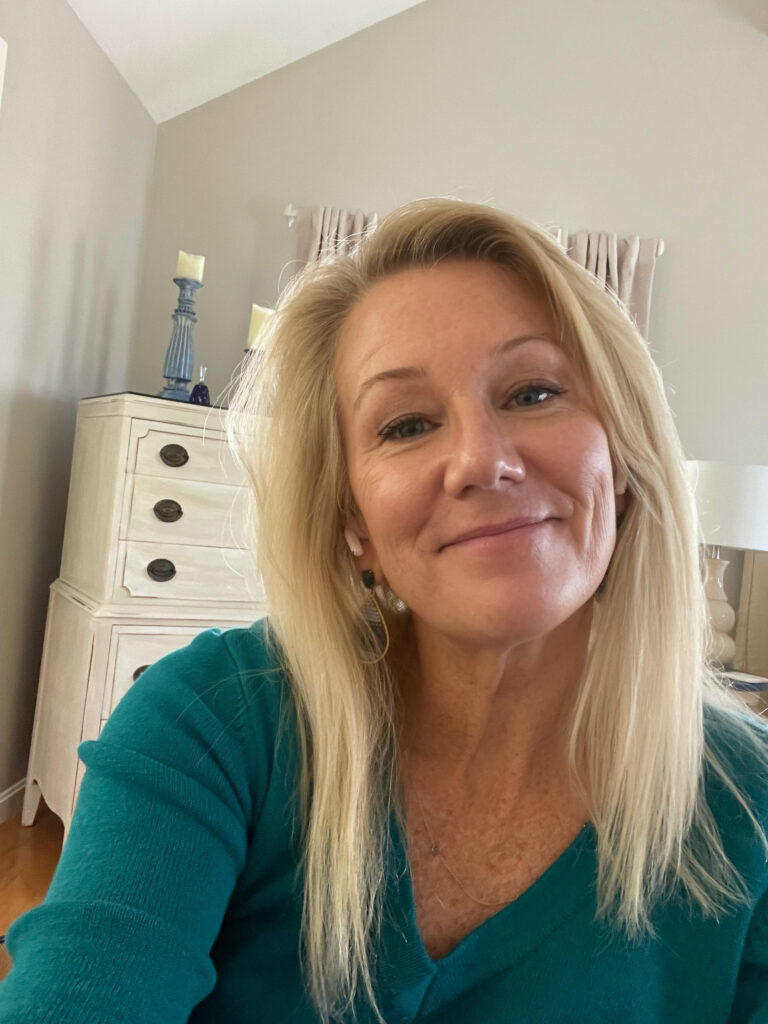
Julie Lively, Double Certified Sobriety Coach
Julie helps women break free from alcohol’s grip and build lives they genuinely love—clear, confident, and fully present. Combining professional training with lived experience, she provides compassionate, practical support for creating sustainable, empowered sobriety.